

Is the “Artist” a Person, a Position, or a Narrative Constructed After the Work?
We tend to speak about the artist as though the category were obvious. An artist is the person who makes art, and the person who makes art becomes an artist. The definition appears so natural that it rarely seems necessary to examine what it actually describes. Yet once we look closely at how artistic practices develop, how they are presented, and how they are eventually interpreted, the relationship between the person, the work, and the identity of the artist becomes considerably less straightforward.
A person can make things for years without considering themselves an artist. Someone may begin painting, writing, photographing, researching, collecting, performing, or building simply because a particular activity gives them a way of understanding something that cannot be understood otherwise. The identity may come later, sometimes because other people begin to name the activity before the person does. A gallery may call someone an artist. A teacher may describe their work as a practice. A curator may place it within a particular conversation. An application may require them to define themselves through a professional category. Eventually, the word begins to feel appropriate.
This suggests that the artist is not necessarily a stable identity that exists before the practice. It can emerge through the practice and through the ways that practice is recognized by others. The person makes the work, but the cultural position of the artist is constructed around that activity over time.
That distinction becomes important because contemporary artistic culture asks for much more than the production of work. Artists are increasingly expected to explain their practices, identify their concerns, establish relationships between different projects, articulate their influences, construct biographies, and communicate a recognizable position. The work is accompanied by an entire language through which the person behind it becomes legible.
The artist, then, is not only the one who makes the work. The artist is also the figure constructed through the interpretation of that work.
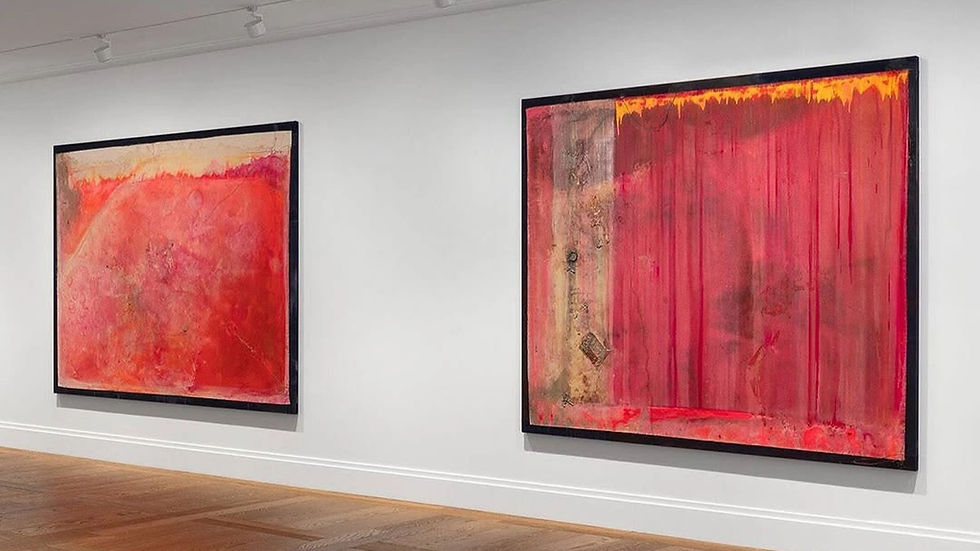
The practice comes before the explanation
There is a tendency to imagine creative practice as the material execution of an idea that already exists. The artist has something to say, identifies the appropriate form, and then produces the work. This model gives intention a central role. It suggests that the artist knows what they are doing before they begin, even if the final result contains discoveries along the way.
Many practices do not develop this way.
A work can begin with a formal problem that has no clear conceptual explanation. An artist may return repeatedly to a particular material without knowing exactly why. A certain image may appear again and again. A process may produce results that are more interesting than the original intention. A failed experiment may reveal a question that becomes more important than the one that initiated the project.
In these situations, the work is not simply carrying an existing idea into material form. It is participating in the production of the idea itself.
This changes the relationship between the artist and the practice. If making can generate knowledge that was not available beforehand, then the artist cannot always be understood as the complete source of the work's meaning. The person initiates a process, but the process can return something unexpected. The practice can reveal concerns that were not consciously selected and expose relationships between experiences that had previously seemed unrelated.
This is one reason why creative practices often become clearer over time. The clarity does not necessarily come from becoming better at explaining what was already known. Sometimes it comes from accumulating enough work for patterns to become visible.
An artist may look back at several years of production and discover that the same question has been present in different forms. The connection may not have been intentional at the beginning. It becomes visible because the body of work has grown large enough to reveal it.
In that sense, the practice can precede the identity that is later used to describe it.
The artist as a cultural position
The situation changes once the work enters a cultural context. The studio is not the only place where an artistic practice exists. The work can move into exhibitions, publications, residencies, archives, educational institutions, galleries, collections, grant applications, interviews, websites, and digital platforms. Each of these contexts asks the practice to become understandable in a particular way.
This is where the artist becomes more than the individual who makes things.
The word “artist” places a person within a cultural position that carries certain expectations. The person is no longer simply someone who produces images, objects, texts, performances, or other forms. They are expected to have a practice. They are expected to have a trajectory. Their work is expected to contain some degree of coherence, and that coherence is often expected to be communicable through language.
A portfolio is therefore rarely just an archive of work. It is also an argument about who produced that work. An artist statement does not simply explain a project; it places the project within a larger understanding of the artist's concerns. A biography establishes a sequence of events through which the practice can be read. Even the selection of which works appear together creates a relationship between them.
These decisions are often treated as administrative or professional necessities, but they have a deeper effect. They help construct the artist as a recognizable subject.
This is particularly significant because cultural systems tend to work through categories. Institutions need to know what kind of practice they are looking at. Curators need language with which to position it. Audiences need some point of entry. Funding structures need criteria through which to evaluate it. None of these needs is inherently problematic, but together they create pressure for artistic practices to become legible.
The difficulty is that legibility and development are not always the same thing.
The demand for a coherent identity
Once an artistic practice becomes visible, there is often an expectation that its different parts should make sense together. A series of paintings should somehow relate to another series. A research project should connect to previous interests. A change in material should be explainable as an evolution rather than a departure. Over time, the artist is encouraged to develop what is often called a “visual language” or “distinctive voice.”
There is value in developing continuity. A sustained practice can create depth precisely because questions are revisited rather than abandoned after a single attempt. Yet the demand for coherence can also produce an unintended problem: the artist begins to become responsible for maintaining the identity that has formed around the work.
This is different from simply developing a practice.
A practice develops because the person continues to work through questions, materials, experiences, and problems. An identity develops through recognition. Once others begin to associate an artist with a particular way of working, changing direction can become more complicated. A new interest may be interpreted as inconsistency. An unfamiliar material may appear disconnected from the established practice. An experiment can be treated as a departure from the artist's “language.”
The identity that once helped the practice become visible can therefore begin to limit its possibilities.
This does not mean that consistency is inherently restrictive. The problem appears when coherence becomes a requirement rather than an observation. There is a significant difference between looking at a body of work and recognizing that certain concerns persist, and deciding in advance that every future work must confirm those concerns.
The first allows coherence to emerge.
The second demands it.
The biography problem
The construction of artistic identity becomes even more complicated when biography enters the picture.
There is a strong tendency to explain artistic work through the life of the person who made it. This can be useful because creative practices are inevitably situated within particular histories, environments, relationships, and experiences. Yet biography is often treated as though it provides a direct explanation of the work.
An experience happened, and therefore the artist made a work about it. A person grew up in a particular place, and therefore their visual language can be understood through that place. A particular personal history exists, and therefore the meaning of the work seems to follow from it.
Real practices are rarely so linear.
People do not necessarily understand the importance of an experience while they are living through it. Memory changes. Associations emerge slowly. Some experiences remain irrelevant to the practice, while seemingly insignificant details become unexpectedly important. An artist can make work about something without initially recognizing its relationship to their own life.
Sometimes the relationship between biography and practice only becomes visible afterward.
This matters because the biography that accompanies an artistic practice is often retrospective. It selects certain experiences and connects them to certain works. It creates continuity where the lived experience may have been fragmented. It does not necessarily invent anything, but it organizes.
The artist's biography therefore becomes part of the interpretation of the work rather than simply its origin.
A work may begin with an experience, but the meaning assigned to that experience can change because of the work.
The direction can move both ways.
Life informs the practice, but the practice can also reorganize the way life is understood.
The narrative comes afterward
Perhaps the most interesting aspect of artistic identity is that it is often constructed retrospectively.
A practice is lived forward, but it is frequently understood backward.
While working, the artist encounters uncertainty. Projects fail. Interests change. Some decisions seem important and later become irrelevant. Other decisions that appeared insignificant begin to matter years afterward. There may be long periods with no clear sense of direction.
Once enough work exists, however, patterns become visible.
An earlier project begins to resemble a later one. A recurring concern becomes identifiable. An experiment that once seemed unsuccessful becomes part of the development of the practice. A period of confusion can be described as a necessary stage of research.
The past acquires a different structure because the present has changed.
This is not necessarily a problem. Narrative is one of the ways people understand their own lives. Without some form of retrospective organization, a practice could remain a collection of disconnected events. The problem arises when the narrative is mistaken for the process itself.
A polished account of an artistic trajectory can make the development appear inevitable. It can create the impression that the artist knew from the beginning what they were investigating, even when the actual process involved uncertainty and accidental discoveries.
The finished narrative removes some of the conditions that made discovery possible.
What looks like a clear artistic position may have emerged from years of not knowing.
The artist statement as an act of construction
The artist statement makes this process particularly visible.
An artist is asked to explain the work, often in a few hundred words. A complex practice that developed through years of experimentation must be translated into a concise account. Certain themes are selected. Certain references are emphasized. Certain relationships between works are established. Others are left outside the frame.
The statement is therefore not simply a description of the artist.
It is one of the places where the artist is constructed.
This does not make it dishonest. Every form of self-description involves selection. The artist cannot include every thought, every failed project, every contradiction, or every private experience. The statement has to make choices.
But those choices matter because they begin to shape how the practice will subsequently be understood.
Once a particular description exists, future work is often read through it. If an artist describes their practice as being concerned with memory, subsequent work may immediately be interpreted through memory. If they describe their work as an investigation into identity, new projects may be positioned within that framework even if the artist's interest has already moved somewhere else.
Language has a stabilizing effect.
It can clarify a practice, but it can also make a changing practice appear fixed.
The artist becomes partially responsible for maintaining the language through which their work is recognized.
Institutions participate in the construction
The artist's identity is not created by the artist alone.
Institutions, curators, critics, galleries, educators, collectors, publications, and audiences all participate in its construction.
A curator can place an artist within a particular historical conversation. A gallery can describe a practice through a certain set of concerns. A catalogue can establish relationships between works. A critical essay can identify influences or connections that were not previously central to the artist's own understanding.
Over time, these descriptions accumulate.
The artist begins to exist through a network of interpretations.
This helps explain why artistic identity can sometimes become surprisingly durable. A person may change considerably while the description of their practice remains attached to an earlier period. A body of work produced ten years ago can continue to determine how later work is approached. An artist may no longer think through the questions that once defined their practice, but those questions can remain institutionally attached to their name.
At this point, the artist becomes partially independent of the individual.
There is the person who continues to live and work, and there is the cultural figure that has been constructed around their work.
The two overlap, but they are not identical.
Recognition changes the practice
Recognition is generally understood as something desirable within an artistic career. It can provide opportunities, resources, audiences, and continuity. Yet recognition also changes the conditions under which a practice develops.
Before a practice is recognized, experimentation can remain relatively private. Once a person becomes known for a particular body of work, every new project enters an existing field of expectations.
The artist is no longer working only against the problem presented by the work itself.
They are also working against what the work has previously established.
This can create a subtle form of self-consciousness. Instead of asking whether a new direction is necessary, the artist may begin asking whether it still looks like them. Instead of following an unexpected development, they may try to preserve continuity with what has already been recognized.
The question “Does this belong to my practice?” can become more powerful than “Is this worth pursuing?”
That is an important distinction.
A practice that is constantly forced to confirm its identity can eventually become a repetition of its own reputation.
The danger is not that the artist becomes commercially successful or institutionally visible. The danger is that recognition becomes an invisible criterion for making decisions.
The artist begins to protect the narrative.
The artist as brand
Digital culture has intensified this problem because artistic identity now circulates far beyond the work itself.
The artist can be encountered through a website, an Instagram profile, an interview, a studio photograph, a short biography, a project description, a photograph of an exhibition, or a sequence of images documenting the process. These fragments accumulate into a public image.
The person becomes increasingly visible as a coherent entity.
This creates a peculiar pressure. It is no longer enough for the work to have some internal relationship with itself. The artist's entire public presence can be expected to communicate a consistent identity.
The studio becomes part of the narrative. The process becomes part of the narrative. The way the artist speaks becomes part of the narrative. Even uncertainty can become something that is communicated strategically.
The artist is therefore no longer only producing work.
They are producing the conditions through which the work is recognized.
This does not necessarily make contemporary artistic practice superficial. It does, however, make the distinction between practice and representation more important than ever.
The image of an artist can become more coherent than the practice itself.
Is the artist therefore fictional?
It would be tempting to conclude that the artist is simply a constructed character.
That would be too easy.
Construction does not mean falseness.
Most identities are constructed through relationships, repetition, memory, language, and recognition. The fact that an identity develops through these processes does not make it unreal.
The problem is not that the artist has a narrative.
The problem is believing that the narrative is identical to the person or the practice.
A biography can be truthful without being complete. An artist statement can be sincere without containing the full meaning of the work. A recognizable practice can remain open to transformation.
The artist is not false because they are constructed.
They are incomplete because no construction can contain everything that a person or practice is.
This distinction allows us to think about artistic identity without reducing it either to an authentic inner essence or to a performance.
The artist is something that develops between the individual, the practice, the work, and the structures through which the work becomes visible.
What would happen if identity followed practice?
Perhaps the most useful consequence of this question is practical.
What happens when artists stop trying to define themselves before they have enough practice to know what they are defining?
This does not mean rejecting statements, biographies, professional identities, or the need to communicate. Those things are part of how artistic practices move through the world.
It means changing their function.
Instead of treating identity as the foundation of the practice, identity can become a temporary description of where the practice currently stands.
This would allow a person to say what their work is concerned with without treating that statement as a permanent contract. It would allow an artist to recognize recurring concerns without forcing every future work to reproduce them. It would make room for contradictions without immediately interpreting them as evidence of a failed identity.
Most importantly, it would allow the work to remain capable of surprising its maker.
A serious practice should be able to produce something that changes the way the artist understands what they were doing.
If every new work simply confirms what the artist already knows about themselves, the practice may have become too dependent on its own narrative.
The artist as an ongoing relationship
Perhaps, then, the artist cannot be located entirely in the person, the work, or the narrative.
The person provides the experiences, attention, memory, body, history, and circumstances from which practice becomes possible. The practice transforms these conditions through repeated acts of making, thinking, selecting, rejecting, and revising. The work is what remains from particular moments within that process, but it can also become a source of new knowledge. The narrative comes later, organizing relationships between things that were not necessarily experienced as connected when they happened.
The artist emerges through the relationship between all of these things.
This makes artistic identity less like an object and more like a process of negotiation. It changes as the practice changes, but it also changes according to the contexts in which the practice is presented and interpreted.
That may be why the question of who an artist is can never be completely settled.
The person continues to change. The practice continues to develop. The work accumulates. The context shifts. Previous interpretations remain attached to the name while new ones emerge around it.
The artist is continuously being reconstructed.
After the work
There is something revealing about the fact that we often understand an artist through a body of work that already exists.
We look backward.
We see patterns.
We connect projects.
We identify concerns.
We construct a trajectory.
Then we return to the beginning and read the earliest work differently because we now know what came later.
The artist appears to have been there all along.
But perhaps that is partly an effect of narrative.
The person who made the first work could not have known everything that the later practice would reveal. The identity that seems obvious in retrospect may have been uncertain at the time. What looks like a deliberate trajectory may have been assembled through many decisions whose significance only became visible afterward.
This does not diminish the practice.
It makes it more interesting.
It suggests that the artist is not simply someone who possesses an identity and expresses it through work. The artist can be understood as someone whose identity is continually negotiated through the act of working.
The practice does not merely communicate who the artist already is.
It participates in deciding who that person becomes.
And perhaps that is why the most valuable artistic identities are not necessarily the most coherent ones. A practice needs enough continuity to develop, but it also needs enough openness to encounter something that it could not have predicted. If the artist becomes entirely defined by the story already attached to their work, the possibility of genuine development becomes narrower.
The question, then, may not be whether the artist is a person, a position, or a narrative constructed after the work.
The artist is all three, but none of them independently.
There is a person who begins somewhere without knowing exactly what they are beginning. There is a practice that gradually produces patterns, questions, forms, and knowledge. There are works that remain as evidence of particular moments within that development. There are institutions and audiences that interpret those works and give them a position within a larger cultural field. And eventually there is a narrative that connects these fragments and calls the result an artist.
The narrative gives continuity to something that was originally uncertain.
The danger begins only when that continuity becomes more important than the uncertainty from which the practice emerged.
A practice should be able to change the person who makes it. It should be able to complicate the identity attached to it. It should be able to produce work that cannot be completely explained by the language that described the previous work.
Perhaps the artist is not the person who has finally discovered who they are.
Perhaps the artist is the position that remains open to being changed by what they make.


Comments