

The Disappearance of Creative Privacy
There was a time when creative work could remain unseen for a while.
An idea could exist without being explained. A drawing could remain unfinished. A text could be written and never published. An artist could spend months developing something without anyone knowing that it existed. The studio, notebook, rehearsal room, desk, or simply the private act of thinking provided a space where creative work could develop without immediately becoming part of a public narrative.

That privacy was not necessarily isolation. It was a condition.
Creative work often needs a period in which it does not have to make sense to anyone else.
Digital culture has complicated that condition. Today, creative practices exist within an environment where documentation, communication, and visibility can begin almost as soon as the work itself. The process can be photographed, recorded, posted, discussed, announced, and interpreted while it is still happening. The boundary between making something and showing something has become increasingly thin.
This has changed more than how creative work is shared. It has changed the space in which creative work develops.
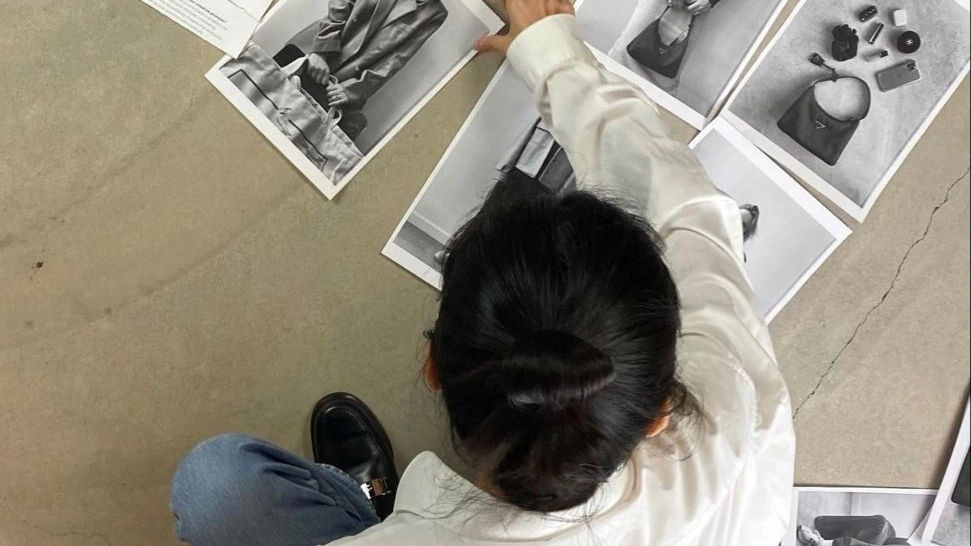
The contemporary creator is often encouraged to show the process. Studio photographs, sketches, unfinished pieces, research materials, references, notes, experiments, failures, and behind-the-scenes moments have become recognizable forms of cultural content. What once belonged to the private life of a practice can now become part of its public presence.
There is something valuable about this shift. Showing process can make creative work more accessible. It can reveal the uncertainty behind finished objects, challenge the myth of effortless creation, and allow audiences to understand that creative practices are constructed through decisions, mistakes, revisions, and time.
But visibility also changes the thing being shown.
Once the process becomes visible, it acquires an audience. Even an imagined audience can be enough to alter the way something develops.
An unfinished idea is no longer simply unfinished if it is being photographed for publication. A sketch is no longer only a sketch if it is being presented as evidence of a process. An experiment begins to carry the possibility of becoming content. The private space of making becomes increasingly aware of the public space waiting on the other side.
This awareness can enter creative decisions before anything is consciously shared.
The creator begins to know that the process may eventually need to be communicated. Certain moments become more photographable than others. Some forms of research are easier to present. Some experiments produce better documentation. Some failures look meaningful when photographed, while others simply look unsuccessful. Even without an explicit strategy, the possibility of future visibility can influence what gets preserved, repeated, or discarded.
The process begins to develop an audience before the work has developed itself.
This is one of the more subtle effects of digital culture. It does not require anyone to demand constant visibility. The expectation can become internalized.
The creator learns to document.
Then to share.
Then to maintain.
Eventually, documenting the practice can begin to feel like part of practicing.
This does not mean that every artist who shares their process is compromising their work. Nor does privacy automatically produce better art. Public exchange can be essential to creative development, and many practices are fundamentally collaborative, social, or participatory. The issue is not whether creative work should be visible.
The issue is whether it still has the possibility of existing without being visible.
That distinction matters.
A creative practice needs spaces where ideas can fail without consequences. It needs room for contradiction, repetition, embarrassment, boredom, and uncertainty. It needs time in which an idea does not have to justify its existence. Some of the most important stages of creative development may produce nothing that is worth showing.
Digital culture makes this increasingly difficult because visibility has become closely associated with activity.
If something is not being shared, it can appear as though nothing is happening.
This is particularly complicated for creators whose professional opportunities depend on remaining visible. Social platforms, portfolios, open calls, exhibitions, publications, and networks all reward forms of communication. An artist may need to demonstrate that a practice is active, coherent, developing, and relevant. The work is no longer evaluated only through what has been produced. The continued existence of the practice itself can become something that needs to be demonstrated.
Creative privacy therefore begins to look almost unproductive.
And contemporary culture is deeply uncomfortable with unproductive time.
There is an expectation that time should produce evidence. Research should produce material. Experiments should produce documentation. Studio time should produce progress. Progress should produce something shareable. What cannot be shown can begin to feel as though it does not count.
This is where the language of process becomes complicated.
The celebration of process can appear to resist the obsession with finished products. But process itself can become a product when it is consistently packaged for public consumption. The sketch, the failed attempt, the studio photograph, the notebook page, the research wall, the unfinished work: all can become recognizable visual forms.
The creative process develops its own aesthetics.
This creates an uncomfortable paradox. The culture that tells creators to “show the process” may also encourage them to make processes that are easier to show.
Not intentionally, necessarily. The influence can be much quieter.
A practice begins to distinguish between what happens and what can be communicated about what happens. Over time, those two things can become increasingly similar.
What is easy to document becomes easier to remember.
What is easy to explain becomes easier to share.
What is easy to share becomes easier to circulate.
And what circulates begins to shape expectations about what a creative practice looks like.
The consequence is not simply that artists become more visible. It is that visibility can start becoming part of the structure of creation itself.
This becomes particularly evident in the relationship between unfinished work and public judgment.
An unfinished idea needs a different kind of attention from a finished one. It may be contradictory because it has not yet resolved itself. It may contain decisions that will later be abandoned. It may look obvious, confused, derivative, or even embarrassing before it develops into something more precise.
Private creative space protects this stage from premature interpretation.
Once an idea enters public space, however, interpretation begins immediately.
An audience does not necessarily know which parts are temporary. A fragment can be read as a decision. An experiment can be interpreted as a direction. A sketch can become associated with the identity of the artist. A temporary interest can begin to look like a permanent concern.
The artist may then become aware of how the work is being understood before they have finished understanding it themselves.
This can create a new form of creative pressure: the pressure to remain consistent with one's own unfinished ideas.
The digital archive intensifies this problem.
Nothing quite disappears.
Previous experiments remain searchable. Old images continue circulating. Past statements can remain attached to current practices. Earlier versions of an artist's identity can remain accessible long after the person has moved beyond them.
Creative development has always involved leaving things behind. Digital culture makes leaving them behind more difficult.
The archive remembers what the practice has already outgrown.
This matters because creative development is not simply an accumulation of successful decisions. It also involves rejection. Ideas disappear. Interests change. Methods stop working. Certain works become irrelevant. Some directions are abandoned without ever becoming fully explained.
A healthy practice needs the right to outgrow itself without having to publicly account for every transition.
But when every stage is documented, development can become retrospective evidence.
The archive begins to construct a narrative.
The artist was interested in this.
Then moved toward that.
Then developed another concern.
Then established a recognizable language.
The messy reality of creative development becomes reorganized into a coherent story after the fact.
Privacy once allowed creative development to be messy while it was happening. Digital visibility increasingly makes that mess part of the record.
There is also another dimension to this disappearance of privacy: the loss of the experience of creating something that belongs only to the creator for a while.
Not everything needs an audience.
This may sound obvious, but contemporary creative culture often treats audience as a necessary component of value. To make something without publishing it can seem incomplete. To develop an idea without documenting it can feel strategically irresponsible. To work privately for a long period can appear disconnected from the professional reality of contemporary creative life.
Yet the absence of an audience can be precisely what allows certain ideas to become possible.
Without the pressure to be understood, an idea can remain strange.
Without the pressure to perform relevance, it can remain small.
Without the pressure to produce evidence, it can remain unfinished.
Without the pressure to be consistent, it can change direction.
Creative privacy is therefore not simply about hiding work. It is about protecting the conditions under which something can become different from what it initially appeared to be.
This is particularly important now because digital culture has made publication incredibly easy. The technical barrier between making and distributing has almost disappeared. A thought can become a post within seconds. An image can become public before its maker has had time to decide whether it should exist outside the studio. A fragment of research can become part of an online identity almost immediately.
The speed is remarkable.
But creative development does not necessarily become better because publication becomes faster.
Some ideas require distance from their first form.
Some need to be forgotten temporarily.
Some need to remain unresolved long enough to become something else.
The disappearance of creative privacy is therefore not primarily a problem of social media. It is a problem of temporal compression.
The distance between thinking, making, showing, receiving feedback, and producing again has become increasingly short.
And when those stages collapse into one another, the creative practice loses some of its ability to remain uncertain.
This is perhaps the most important thing to protect.
Not secrecy.
Uncertainty.
The possibility of making something before knowing what it is, before knowing how it will be received, before knowing whether it belongs to the practice at all.
Creative work does not always need more exposure. Sometimes it needs a place where exposure is temporarily irrelevant.
A private space allows an idea to exist before it becomes a statement. It allows a practice to develop before it becomes a narrative. It allows the creator to encounter the work without immediately encountering the expectations surrounding it.
In that sense, creative privacy is not the opposite of cultural participation.
It is one of the conditions that can make meaningful participation possible.
The challenge is not to reject visibility, documentation, or digital culture. These have become important parts of contemporary creative life and can open forms of exchange that would otherwise be impossible.
The challenge is to recognize that not everything that happens inside a creative practice needs to become visible.
Some work needs an audience.
Some work needs an institution.
Some work needs circulation.
And some work needs time in which nobody is looking.
A creative culture that cannot accommodate that last condition risks confusing activity with development, documentation with practice, and visibility with value.
The right to make something privately may therefore be one of the quieter forms of creative freedom left to protect.
Not because the work must remain hidden.
Because, sometimes, it needs to exist long enough without being seen to become worth seeing.


Comments